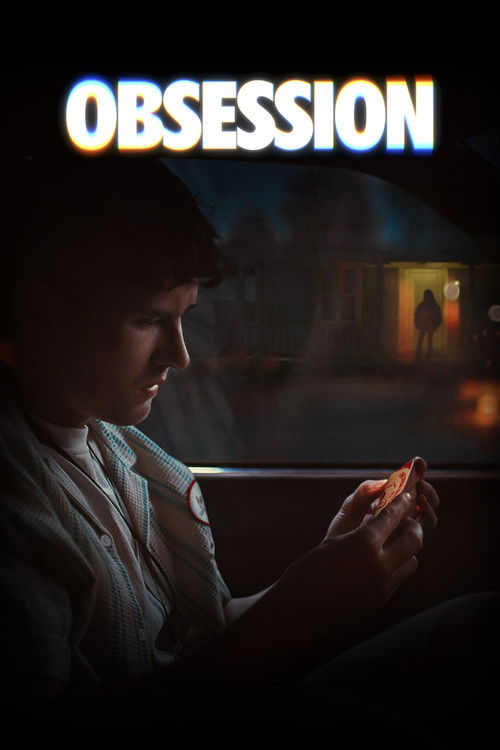
I heard about Obsession because, about two days before I saw it, my entire social media feed was suddenly swamped with takes about it. Obsession and The Backrooms, the latter of which I still have not seen, seem to be the current Gen Z horror champions. Both appear to have interesting ideas, but Obsession stood out online because the conversation around it sits somewhere between the gender wars and the culture wars. People seemed convinced that the movie had a lot to say about both.
The basic premise is simple: a man likes a woman, wishes that she would fall in love with him, and his wish is granted to terrible effect. From there, the interpretations get wildly different. People have argued about everything from the exact mechanics of the movie’s spirituality or demonology to the deeper subtext. How is sexual violence involved? What is the movie saying about incels? Is the main character a hero, a villain, or just a pathetic guy caught in something awful?
I went into the movie hoping I would be able to see those layers more clearly and investigate them for myself. Granted, I had already read the Wikipedia page, watched TikToks and Instagram reels, and seen the Twitter discourse, so I had effectively spoiled the whole movie for myself. But I did not come away thinking that this supposed subtext was built into every line. I do think the main character is rightly looked down on in the first fifteen minutes. But a lot of the commentary frames him as someone who is knowingly playing along, or choosing to stay in it. That was not my reading.
To me, the movie is about a character who becomes alarmed by what is happening, but who is continually pulled back into this relationship with a demon. I do not think there is as much gender-war or culture-war material here as people are claiming. What makes the movie interesting is not that it is secretly about some contemporary online debate. It matters because it is about something much more basic: desire, love, loneliness, and the horrible consequences of getting exactly what you think you want.
That sounds lofty, maybe even a little over-serious, but I do not think the movie is fundamentally saying, “This is the problem with men,” or “This is the problem with incels.” I think it is saying something closer to: this is the problem with being human.
Outside of all the noise, the movie really is good. I can see why it generated so much drama and so many interpretations, but I do not think it is really about the discourse people attached to it. I think it is about love. In fact, the movie tells you that directly from the beginning: this is a love story, not a romance.